


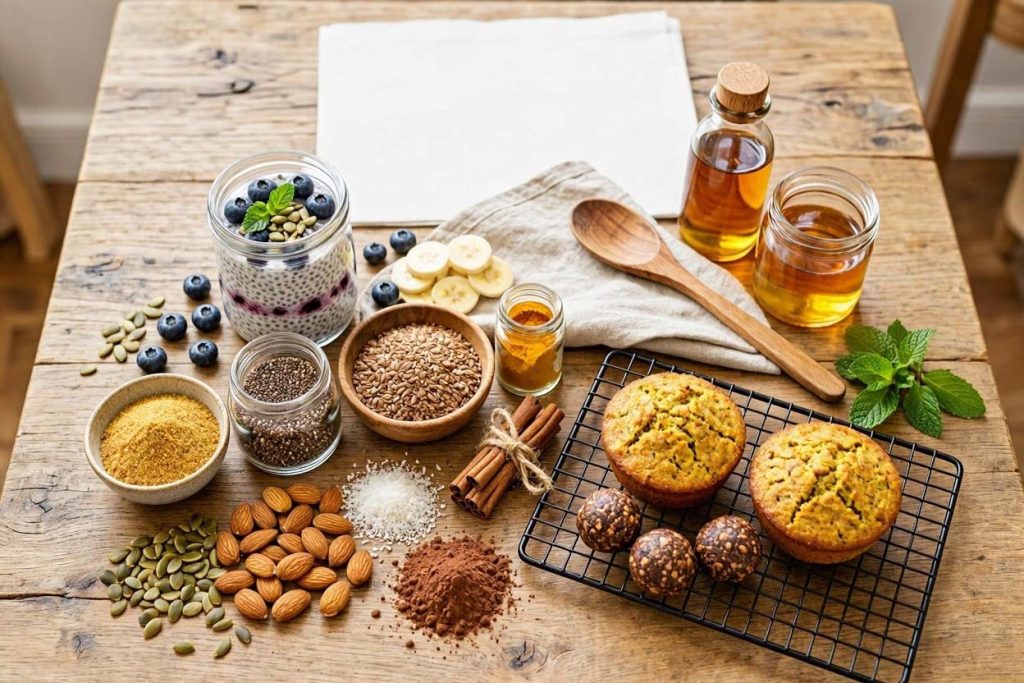
Healthy Baking Made Delicious: Smart Swaps for Fibre, Flavour and Everyday Wellbeing
Healthy baking does not have to mean dry muffins, bland bread or desserts that taste like punishment. In fact, some of the most satisfying bakes come from simple upgrades: oats instead of refined flour, yoghurt instead of excess butter, fruit for natural sweetness, and psyllium for a beautifully soft, well-bound texture.
The idea is not to make baking “perfect.” It is to make it more nourishing, more interesting and easier to fit into a balanced lifestyle. A muffin can still taste like a muffin. Bread can still feel comforting. But with the right ingredients, it can also bring more fibre, texture, flavour and variety to your day.
Psyllium is one of the easiest ingredients to start with. Foodin’s Organic Psyllium Fibre and Organic Psyllium Powder absorb liquid and help gluten-free dough bind and hold together. This makes them especially useful in bread, buns, pancakes and other recipes where you want a better texture without relying on gluten. Psyllium products provide 89 g of fibre per 100 g, making them a convenient way to add fibre to baking.
Start with better basics
The easiest healthy-baking upgrade is not a complicated superfood blend. It is simply replacing part of the refined flour with ingredients that bring more fibre, flavour and texture.
- Replace half of the white flour with oat flour, wholegrain flour or buckwheat flour.
- Use Greek yoghurt, mashed banana or unsweetened apple purée instead of some of the butter.
- Reduce sugar gradually and use ripe banana, grated apple, berries or warming spices for flavour.
- Replace some chocolate chips with raw cacao, chopped nuts or seeds.
- Add a little psyllium, especially when baking gluten-free bread, buns or pancakes.
Wholegrain flours generally contain more fibre than refined flours, and dietary guidance encourages making at least half of your grains wholegrain. Wholegrain flour absorbs more liquid, so you may need to add a little extra water, milk or plant-based drink to keep the batter smooth.
Psyllium: the quiet hero of gluten-free baking
Psyllium may not look exciting, but it can transform gluten-free baking. It absorbs liquid and forms a gel-like texture, helping dough hold together, improving structure and making it easier to handle.
This is particularly helpful when baking without wheat flour. A gluten-free loaf can become less crumbly, pancakes can hold together better, and buns can have a more satisfying texture.
For your first attempt, add 1 teaspoon of psyllium powder to pancakes, muffins or smoothies. For bread, start with 1 tablespoon per loaf. Because psyllium absorbs a lot of liquid, let the mixture rest for 5–15 minutes before baking and add extra liquid if it becomes too thick.
Psyllium is also useful beyond baking. Stir a small amount into a smoothie for extra body, or mix it into yoghurt with berries for a more filling breakfast. Foodin recommends drinking at least a glass of water with psyllium and taking it 30–60 minutes before or after meal replacements, supplements or medicines.
Turmeric: colour, warmth and character
Turmeric brings a beautiful golden colour and a gently earthy, slightly peppery flavour to baking. It pairs especially well with banana, carrot, ginger, cinnamon, coconut and citrus.
You do not need a large amount. A quarter to half a teaspoon can add colour and warmth to muffins, porridge bars, pancakes or energy bites. Turmeric is commonly used as a spice in food, and its active compound is curcumin.
If you use turmeric in baking, pair it with ingredients such as banana, carrot, ginger, cinnamon and black pepper. Black pepper contains piperine, which can increase curcumin absorption; however, turmeric and curcumin supplements—particularly highly bioavailable formulations—should be used cautiously, and anyone who is pregnant, taking medicines or has a medical condition should seek advice from a healthcare professional first.
For baking, think of turmeric as a flavour ingredient rather than a cure-all. A golden turmeric muffin with banana, ginger and oats can be delicious, colourful and comforting—without needing exaggerated health claims.
Almonds: crunch, richness and satisfaction
Almonds are one of the easiest ways to make healthy baking feel more indulgent. They add crunch, a subtly sweet flavour and healthy unsaturated fats, while also helping baked goods feel more satisfying.
- Add chopped almonds to muffins, banana bread and granola.
- Use ground almonds in cakes, pancakes and cookies.
- Stir almond butter into energy balls or overnight oats.
- Sprinkle toasted almonds over fruit crumbles and yoghurt bowls.
Ground almonds can add moisture and richness to cakes and muffins, while chopped almonds create a pleasant crunch. Nuts and seeds are included among protein foods in dietary guidance, but they are also energy-dense, so a small handful is usually enough. If you are baking for someone with a nut allergy, use seeds or oats instead.
Coconut: tropical flavour with a satisfying texture
Coconut brings a naturally sweet, aromatic flavour to baking. Desiccated coconut works beautifully in energy balls, muffins and granola, while coconut flour can add a soft, tender texture to pancakes and cakes.
Coconut flour is highly absorbent, so it is best used in small amounts and combined with eggs, yoghurt, banana or another moisture-rich ingredient. A little goes a long way: too much can make a bake dry.
Try coconut in coconut and berry muffins, chocolate coconut energy balls, tropical banana bread, coconut and turmeric porridge bars, or coconut chia pudding. Coconut products can be delicious, but they vary widely in fat content, so use them for flavour and texture rather than assuming they are automatically lighter than other baking ingredients.
Maple syrup and honey: sweetness with character
Maple syrup and honey can add more character than plain white sugar. Maple syrup has a warm, caramel-like flavour, while honey brings floral notes that work well with oats, yoghurt, nuts and spices.
However, it is important to be honest: maple syrup and honey are still added sugars. They may offer more flavour complexity, but they should be used in moderation rather than treated as unlimited “healthy” sweeteners.
A sensible approach is to reduce the amount of sweetener gradually. Many muffin, loaf and pancake recipes taste perfectly good with less sugar than the original recipe suggests, especially when banana, berries, cinnamon, vanilla or citrus zest are included.
- Use fruit for much of the sweetness.
- Add only a small amount of maple syrup or honey if needed.
- Use spices such as cinnamon, ginger and cardamom to make the flavour more interesting.
- Avoid turning a “healthy” bake into a dessert simply because it contains honey or maple syrup.
Flaxseed and chia seeds: tiny ingredients, big texture
Ground flaxseed and chia seeds are two of the most useful ingredients in healthier baking. Both absorb liquid, add fibre and help create a pleasant, moist texture.
Ground flaxseed has a mild, nutty taste and works well in muffins, pancakes, bread and overnight oats. Chia seeds form a gel when mixed with liquid, making them excellent for puddings, jams, energy balls and egg-free baking.
- Add 1–2 tablespoons of ground flaxseed to muffin or pancake batter.
- Mix 1 tablespoon of chia seeds into yoghurt, smoothie bowls or porridge.
- Use chia gel as a binding ingredient in some egg-free recipes.
- Combine flaxseed and psyllium in gluten-free bread for extra structure.
Seeds are included among protein foods in healthy-eating guidance, and they can add texture, fibre and unsaturated fats to baked goods. Because they absorb liquid, it is best to let chia or flaxseed mixtures rest for a few minutes before baking.
Pumpkin seeds: the crunchy finishing touch
Pumpkin seeds, also known as pepitas, bring a satisfying crunch and a slightly earthy flavour to both sweet and savoury baking. They are especially good in banana bread, seeded loaves, granola, muffins and energy bites.
Their green colour also makes a bake look more inviting. Sprinkle them over the top of a loaf before baking, fold them into muffin batter, or toast them lightly and use them as a topping for porridge or yoghurt.
Pumpkin seeds pair particularly well with banana and cinnamon, apple and ginger, dark chocolate and orange, carrot and turmeric, beetroot and cocoa, or courgette and lemon. A small handful is enough, because seeds are nutritious but energy-dense.
Raw cacao powder: rich chocolate flavour with less sugar
Raw cacao powder is a fantastic ingredient for anyone who loves chocolate but wants more control over sweetness. Unlike sweetened chocolate chips, cacao powder has a deep, intense chocolate flavour without added sugar.
Use it in chocolate banana muffins, beetroot brownies, chocolate chia pudding, cacao and almond energy balls, chocolate protein pancakes, or cacao and pumpkin-seed granola.
Cacao pairs especially well with banana, almond, coconut, orange zest, cinnamon and a small amount of maple syrup. Start with 1–2 tablespoons in muffins or pancakes, then adjust to taste.
For a chocolate bake that feels indulgent but less sweet, combine raw cacao powder with ripe banana, almond flour and a little dark chocolate. The result is rich, moist and satisfying without needing a large amount of added sugar.
Recipe: Golden Banana Turmeric Muffins
These muffins are soft, fragrant and gently spiced. The turmeric gives them a beautiful golden colour, while banana and cinnamon provide natural sweetness.
Makes: 10–12 muffins
Preparation: 10 minutes
Baking: 20–25 minutes
Ingredients
- 2 ripe bananas, mashed
- 2 eggs
- 150 g Greek yoghurt
- 60 ml olive oil or rapeseed oil
- 1 teaspoon vanilla extract
- 150 g oat flour or finely blended oats
- 100 g wholegrain flour
- 1 teaspoon baking powder
- 1 teaspoon ground cinnamon
- ½ teaspoon ground turmeric
- ¼ teaspoon ground ginger
- 1 tablespoon psyllium fibre or psyllium powder
- 100 g blueberries or chopped apple
- 2 tablespoons pumpkin seeds
Method
- Heat the oven to 180°C (160°C fan) and line a muffin tin.
- Mash the bananas, then whisk in the eggs, yoghurt, oil and vanilla.
- Add the oats, flour, baking powder, cinnamon, turmeric and psyllium.
- Stir until combined and leave to rest for 5–10 minutes.
- Fold in the fruit and pumpkin seeds.
- Divide between muffin cases and bake for 20–25 minutes.
- Cool before serving.
Why it works: Banana provides natural sweetness, yoghurt adds moisture and protein, and psyllium helps create a soft, cohesive texture. The turmeric gives the muffins a warm golden colour without making them taste overly spiced.
Recipe: Chocolate Almond Chia Energy Balls
These no-bake energy balls are perfect for meal prep, lunchboxes or a quick snack before or after exercise.
Makes: 12–14 balls
Preparation: 15 minutes
Chilling: 30 minutes
Ingredients
- 100 g almonds
- 100 g dates, pitted
- 2 tablespoons raw cacao powder
- 1 tablespoon chia seeds
- 1 tablespoon ground flaxseed
- 1 tablespoon desiccated coconut
- 1 tablespoon maple syrup or honey, optional
- 1–2 tablespoons water, if needed
- Extra desiccated coconut for rolling
Method
- Blend the almonds until finely chopped.
- Add the dates, cacao powder, chia seeds, flaxseed and maple syrup or honey.
- Blend until the mixture starts to stick together.
- Add a little water only if needed.
- Roll into small balls and coat in coconut.
- Chill for at least 30 minutes.
Why it works: Almonds, chia and flaxseed add texture and healthy fats, while cacao provides a rich chocolate flavour. Keep the portions small: energy balls are nutritious, but they are still energy-dense.
Recipe: Berry Psyllium Chia Pudding
This is an easy make-ahead breakfast or dessert that takes only a few minutes to prepare.
Ingredients
- 250 ml milk or unsweetened plant-based drink
- 3 tablespoons chia seeds
- 1 teaspoon psyllium powder
- 1 teaspoon maple syrup or honey, optional
- 150 g berries
- Greek yoghurt, to serve
- Pumpkin seeds or chopped almonds, to serve
Method
- Mix the chia seeds, psyllium powder, milk and sweetener in a jar.
- Leave for 10 minutes, then stir again.
- Refrigerate for at least 2 hours or overnight.
- Top with berries, yoghurt and seeds before serving.
Why it works: Chia and psyllium create a thick, satisfying texture, while berries add colour and freshness. Vitamin C contributes to the normal function of the immune system, and berries are an easy way to add fruit to breakfast or snacks.
How to bake for your goals
For more fibre
Add psyllium, ground flaxseed, chia seeds, oats, wholegrain flour, berries or grated vegetables. Start with small amounts and increase the liquid if necessary.
For more satisfying snacks
Pair baked goods with protein: Greek yoghurt, skyr, eggs, cottage cheese or a fortified soy yoghurt. Protein and fibre can make a snack feel more filling than a sweet pastry eaten on its own.
For less added sugar
Use ripe banana, apple, berries or spices for flavour. If you use honey or maple syrup, measure it rather than pouring freely, and reduce the amount gradually over time.
For more variety
Rotate your ingredients. Try turmeric and ginger one week, cacao and almond the next, then coconut, chia and berries after that. Variety makes healthy baking more enjoyable and helps you avoid getting bored.
For balanced portions
Bake smaller muffins, slice loaves before freezing, and store treats in individual portions. This makes it easier to enjoy something sweet without overdoing it.
A healthier baking checklist
- Can I replace part of the white flour with oats, wholegrain flour or buckwheat?
- Can I add psyllium for better texture and binding?
- Can I use fruit, spices or cacao for flavour instead of extra sugar?
- Can I add almonds, chia, flaxseed or pumpkin seeds for crunch?
- Can I use yoghurt, banana or apple purée for moisture?
- Can I make a smaller batch or freeze individual portions?
- Can I pair the bake with protein or fruit?
The takeaway
Healthy baking should never feel like a punishment. The best recipes are the ones you genuinely want to make again: warm banana muffins with turmeric and pumpkin seeds, chocolate almond energy balls, seeded gluten-free bread, or a berry chia pudding topped with coconut.
Psyllium, almonds, coconut, chia, flaxseed, pumpkin seeds, raw cacao and spices all bring something different to the table. You do not need to use them all at once. Start with one or two swaps, learn how your favourite recipes respond, and build from there.
The most sustainable approach to healthy baking is simple: use real ingredients, keep added sugar moderate, enjoy sensible portions, and make food that tastes good enough to become part of your routine.
Explore psyllium for baking
If you would like to try psyllium in your own kitchen, explore:
Both are unflavoured, versatile ingredients that can be used in gluten-free baking, smoothies and everyday cooking. Start with a small amount, adjust the liquid as needed, and enjoy the process of making baked goods that fit more comfortably into a balanced lifestyle.